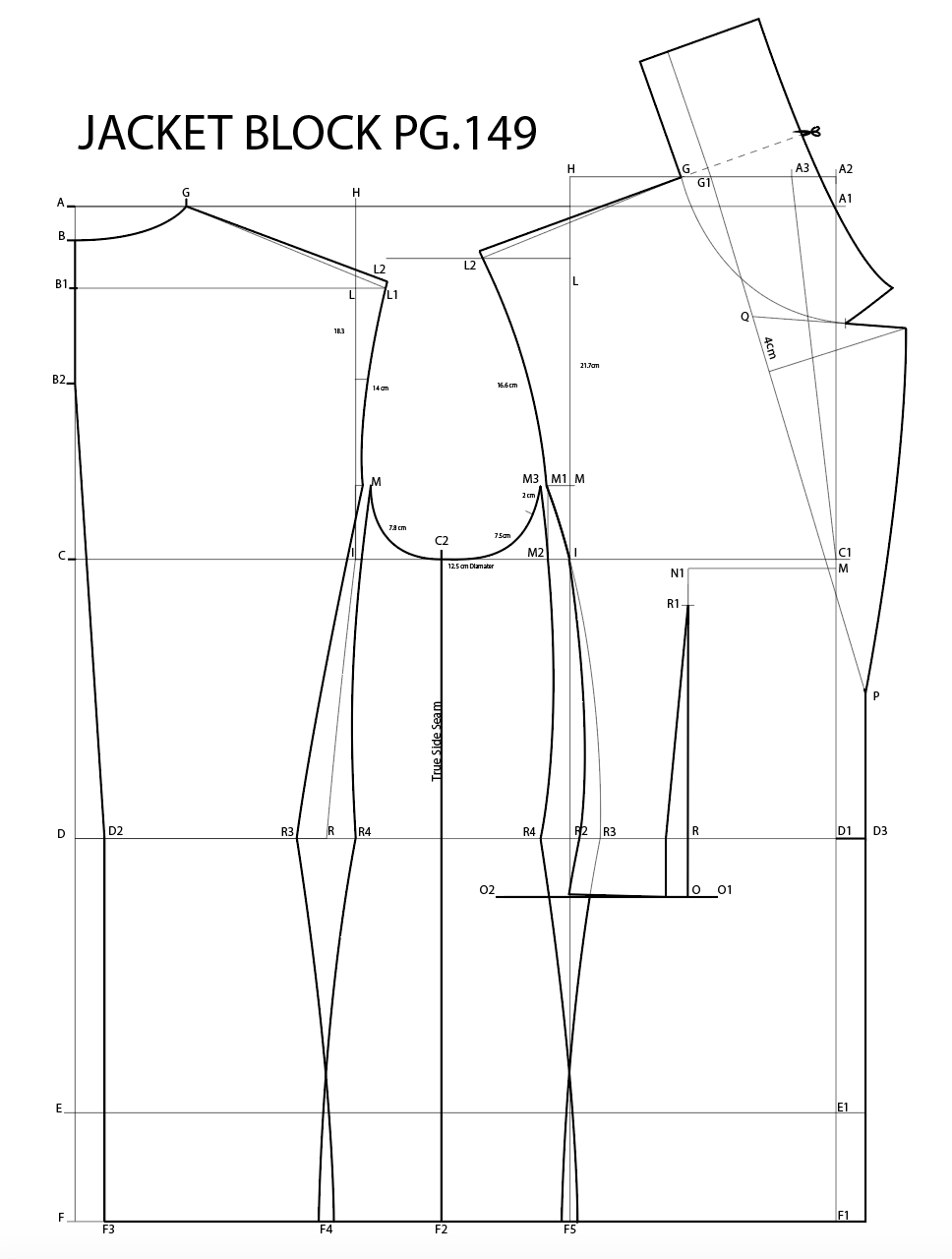
Flat pattern drafting for garment design uses a series of measurements, or calculations which are drawn on a piece of paper with rulers and a pencil or on a computer screen with programs and pixel accurate. The image created communicates the final shape each piece of fabric in a garment will be cut to. Measurements from the body are used to create a block or sloper which is a first image that is the general shape of the garment. A diagrammatic image is created in 2-dimensions, see diagram above for example.
This example above is created by using formulaic strategy to generalize the human form. This method has many flaws, but is the most dominate form of visual communication in the fashion industry as all final pattern pieces must be flat in order to cut them out of a flat textile. The process of sewing applies the contextual part of garment design, as pattern drafting is achieved in 2D. This block or sloper can be sewn by adding strategic parallel lines to where-ever else the garment would be stitched together. This first garment is typically a base pattern, which may require many more manipulations of the lines to finalize a design concept, let alone a custom fit. A test pattern critically requires minimal seams, where shaping appears commonly through darts. This example above is an advanced drafting block that uses both body measurements and calculations based on height and bust size to establish the ease and fit of the final pattern. Not all methods are transferable to customization in the size, so many of these methods require a series of fittings or adjustments to establish a quality fit. The weight of the fabric, and the type of finishing are considerations that this part of the production process, so the block proportions and ease will depend on the final fabric combined with the type of garment. (eg. a coat is worn over a shirt or sweater, adding these possible layers to a dress form or fit model will help inform fit updates true to how the customer will wear it)
 Jessica & Sean Bayntun
Leave a comment